Industry
Part of Federal rules for labeling zero proof drinks
Zero proof drinks businesses: what decides a listing
Zero proof drinks businesses and their buyers weigh shelf turnover, bar consistency, waste, storage, staff training, and the food-safety rules that apply.
For zero proof drinks businesses, a retail buyer and a bar manager look at the same bottle and see two different problems. The shop is buying shelf space and turnover. The bar is buying a pour that a tired server can make correctly at eleven at night. Very few products satisfy both, which is why the lists diverge.
What to take away
- Retail buys on turnover per facing. Bars buy on speed, consistency and waste.
- Chilled products ask more of a listing than shelf-stable ones, and buyers weigh that difference.
- Staff training matters, because an unfamiliar category gets sold badly by default.
- Food safety obligations behind a bar do not relax because a drink contains no alcohol.
What the retail buyer is counting
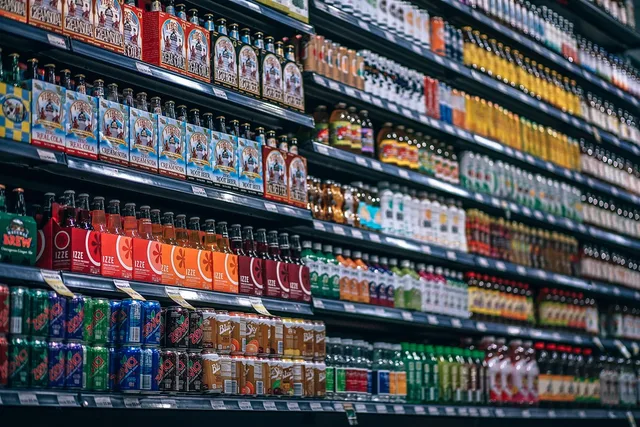
Retail decisions come down to sales per facing per week against what it takes to hold the stock: space, handling and refrigeration. A zero proof bottle competes with everything else that could occupy that space, and a slow mover in a chilled case is harder to justify than a slow mover on a dry shelf.
In practice the retail buyer runs through five questions before a listing:
- How many units will sell per facing each week?
- Is the product shelf-stable, or does it need the chilled case?
- Is the case pack shallow enough for a trial order?
- How long is the shelf life once the stock arrives?
- Can floor staff explain what it is and how to serve it?
Retail listing checklist
- Case pack size sets first order depth
- Refrigeration needed before opening?
- Format supports trial purchase?
- Shelf life at distribution center
- Brand supplies shelf talkers?
What the bar manager is counting
Behind a bar, the question is different. Can a busy server produce the same drink twice? A product that needs a fresh juice, a specific dilution and a garnish prepped daily will drift within a week of listing. To assess that workload, count the components, prep time and ingredients likely to be discarded, because that prep load is what the bar manager is agreeing to when the listing is signed. A bar manager's test is therefore practical: have two servers build the drink from the spec sheet during a shift and compare the results.
Waste is the other side of it. An open bottle that has to be finished quickly generates spoilage on quiet nights, and a bar with a small zero proof following will feel that quickly. Many venues solve it with a small number of bottles used across several drinks rather than a wide list used rarely.
The rules do not relax
Serving a drink without alcohol does not change food handling duties, and those duties belong in the listing decision. FDA's employee health and personal hygiene handbook is written as questions and answers for management and staff. It reflects the 2017 Food Code.
It covers the six highly infective pathogens that food workers can transmit (norovirus, hepatitis A virus, Shigella, Shiga toxin-producing E. coli, Salmonella Typhi and nontyphoidal Salmonella), what to do after a vomiting or diarrheal contamination event, and how to handle ready to eat food touched by an excluded employee.
Garnishes, ice and citrus are ready to eat food. The pairing side of that, where cut fruit and cold plates do most of the work, is covered in our notes on bar snacks and produce handling.
The stakes are not theoretical. CDC's work on restaurant food safety practices states that more than half of all foodborne outbreaks in the United States are associated with restaurants, banquet facilities, schools and other institutions. Its Environmental Health Specialists Network researches the practices behind those numbers.
Where the two buyers agree
Both want a product that explains itself. A bottle whose label makes clear what it is, how it is served and how long it keeps costs less to sell in either setting. Both also prefer a maker who answers the specification questions quickly, because a supply gap in a small category is very visible.
Production choices sit underneath all of this, and several of them are visible from the outside to a buyer. Buyers can compare the product's identity, serving directions and storage information with the maker's specification; for broader context, see the category guide.