Reviews
Part of Matching nonalcoholic aperitif styles to five buyer types
Nonalcoholic aperitifs labels: color and ingredient clues
Nonalcoholic aperitifs labels: color disclosures, food allergen labeling, and what ingredient order can suggest about a drink's flavor.
When reading nonalcoholic aperitifs labels, keep the regulatory distinction in view: FDA food-labeling rules and TTB alcohol-beverage labeling rules are not interchangeable. Color and ingredient order can still offer useful clues. That makes an aperitif label unusually informative if you know which lines to read.
What to take away
- Three color additives must be named specifically on alcohol beverage labels when present.
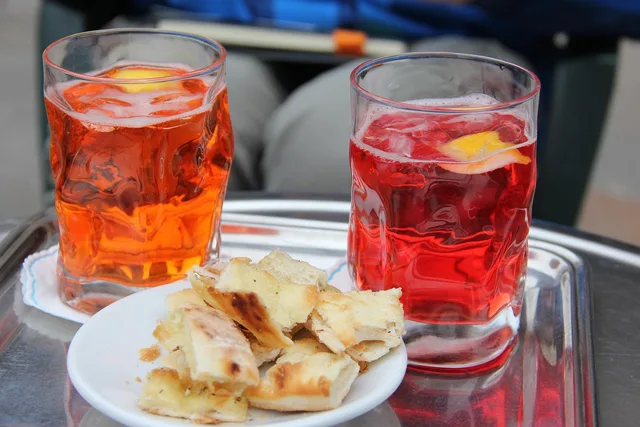
- Color is not a reliable guide to ingredients. Red can come from fruit, from an insect derived extract or from a certified color.
- Allergen labeling for ordinary foods rests on a defined list of major allergens.
- Ingredient order tells you whether bitterness was bought as a compound or built from botanicals.
Color disclosures on alcohol beverage labels
For alcohol beverages, TTB's guidance on color ingredient disclosures is specific. Three color additives must be named on the label if present: FD&C Yellow No. 5, cochineal extract and carmine.
The phrase "Contains" followed by the additive name has to appear. A statement of composition on the brand label may use "certified color" or "artificial color", but the specific name still has to be declared elsewhere on the label.
Cochineal extract and carmine are derived from insects, which matters to some buyers for reasons that have nothing to do with safety. The requirement to name them is what makes that choice possible.
The allergen list behind ordinary food labels
For products regulated as food rather than as alcohol beverages, allergen labeling follows the Food Allergen Labeling and Consumer Protection Act of 2004 (FALCPA). Its findings identify eight major foods or food groups associated with 90 percent of food allergies: milk, eggs, fish, crustacean shellfish, tree nuts, peanuts, wheat and soybeans. Sesame is also a major allergen under the Food Allergy Safety, Treatment, Education, and Research Act (FASTER Act).
Under FDA food-labeling rules, major allergens must be identified in the ingredient list or in a separate “Contains” statement immediately after or adjacent to it. Requirements have been amended since FALCPA was enacted, so a producer working from an old reference can be behind.
Aperitifs are not an obvious allergen risk, but tree nut distillates, wheat derived alcohol and dairy based clarifying steps all appear in this category. Reading the first entries on any bottle is the habit our notes on what to check on a back label recommend.
Read the ingredient order for the bitterness
Read the ingredient order
- If gentian, quinine, cinchona, wormwood or a named citrus peel appears early, bitterness was built from botanicals.
- If natural flavors appears before any named botanical, bitterness was largely bought in.
- If sugar or glucose syrup appears second, expect sweetness to lead the drink.
- If an acidity regulator appears without any fruit, the sharpness is added rather than inherent.
None of these is a fault. A well made compounded aperitif can be excellent. The point is that the ingredient order predicts the drink better than the front label does.
What the label will not tell you
It will not tell you bitterness intensity, which is the single number a buyer most wants. It will not tell you the intended dilution unless the producer chose to print it. And it will not tell you whether the color is doing any flavor work, which it usually is not.
None of those gaps is a labeling failure. Labeling rules do not require them, and no producer volunteers a number that invites comparison. Until the category agrees on a shared bitterness measure, tasting is the only route to that figure. A structured flight stays more informative than label reading.
Building that comparison at home needs a method, not equipment. Our home comparison guide sets it out.
The category level view sits in our buyer's guide to aperitif styles, and the same label questions from a venue's side appear in reading the bottles behind an alcohol free bar.