Guides
Nonalcoholic beer tasting at home: how to set up a fair style comparison
A practical home setup for fair nonalcoholic beer tasting: glassware, temperature, pour size, palate reset, tasting order and a one page scoring sheet.
What to take away
- Identical glasses, one serving temperature per style, and a fixed pour size are what make a home tasting fair.
- Pour 2 to 3 ounces per sample and stop at four beers, because bitterness accumulates fast.
- Serve lagers coldest, IPAs in the middle, stouts warmest, and taste in that order.
- Reset with water and a plain cracker, then wait about a minute before the next pour.
- Score each beer before you discuss it, and note price per ounce if value matters.
Pick one glass and use it for every pour
Glass shape decides how much aroma reaches your nose. A tall narrow glass sends carbonation upward and releases little aroma. A tulip or a snifter holds hop oils and roast notes near the rim.
Buy four identical glasses instead of four different ones. Matching glassware removes a variable you cannot score or correct after the fact.
Rinse each glass in hot water and let it air dry. Dish soap leaves a film that collapses foam and adds a scent you will blame on the beer.
Nonalcoholic beer is brewed on the same equipment as regular beer and then dealcoholized or fermented to a low final gravity. The familiar families still apply, and how nonalcoholic beer is made covers the methods behind the bottles you are pouring.
Set temperature and pour size before you taste
Temperature changes bitterness more than any other variable. Cold suppresses hops and roast. Warm beer tastes flat and harsh at the same time.
Use a thermometer on your first flight. Guesswork is the fastest way to score two identical beers differently.
Set temperature and pour size
| Style family | Target temperature | Glass | Pour size |
|---|---|---|---|
| Lager and pilsner | 38 to 45 F | Tall narrow tasting glass | 2 to 3 oz |
| Pale ale and IPA | 45 to 50 F | Tulip | 2 to 3 oz |
| Stout and porter | 50 to 55 F | Snifter or wide pint | 2 to 3 oz |
Pour down the side of a tilted glass to keep the head under control. A hard pour throws foam, and foam carries aroma away before you can smell it.
Alcohol limits are not identical everywhere. Low alcohol beer definitions vary by jurisdiction, so a bottle sold as nonalcoholic in one market may carry a different statement in another.
In the United States the alcohol statement on a malt beverage label is set by federal malt beverage labeling rules, which is where brewers check what they may claim.
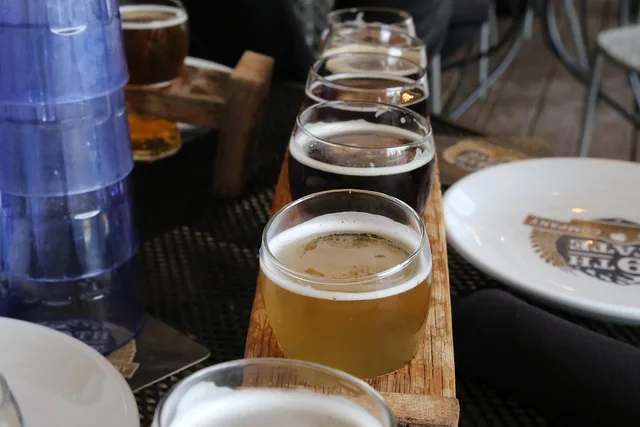
Once the setup is fixed, the same flight becomes a real style test. nonalcoholic IPA versus lager versus stout compares body, hop aroma, freshness and price across the three families.
Order the flight and reset between pours
Order the flight and reset
- Start with the lightest body and the lowest bitterness, usually a lager or pilsner.
- Move to a pale ale or wheat beer, then to an IPA.
- Finish with a stout or porter.
- Re-taste the first beer last, after a full reset, to check whether your scores held.
Four samples is a working limit. Past that, bitterness stacks up and every later score drifts low.
Reset with room temperature water and a plain saltine or a slice of green apple. Wait about a minute, then move on. Strong flavors linger longer than most people expect.
Build a one page scoring sheet
Score each beer from 1 to 5 on aroma, appearance, body, bitterness, flavor balance, finish and overall. Leave a notes column for words you actually taste, not adjectives you admire.
- Two clean identical glasses per sample, coded with tape and letters
- Water and crackers within reach of every seat
- Thermometer reading recorded for each pour
- Scores written before any group discussion
- Price per ounce noted for each bottle
Code the bottles so you do not know which is which. Tape over the labels and write A, B, C and D. Blind scoring is the cheapest upgrade to any home tasting.
Example: a four beer Saturday flight
Buy one lager, one pale ale, one IPA and one stout. Chill each to its target temperature, then pour 2 ounces into a coded glass.
Score everything, reset, and re-taste sample A. If your score moved, your palate drifted and the later numbers are suspect.
Finish by comparing price per ounce. A four dollar single and a ten dollar six pack are not far apart once you divide by volume, and the cheaper beer sometimes wins.