Guides
Blind nonalcoholic beer tasting: how many tasters you need for a fair result
Panel sizes, sample caps, and balanced pour orders for blind nonalcoholic beer tastings, plus a twelve taster IPA, lager and stout run you can copy.
What to take away
- Twelve tasters is the working minimum for a fair blind ranking, and every beer should carry at least eight scores.
- Cap a session at nine samples per person, poured as 60 ml (2 oz) servings.
- Randomize pour order for each taster with a balanced grid, never one shared order.
- Score bitterness, body and aroma separately, then report the median next to the mean.
Panel size: how many tasters a ranking needs
Two numbers decide whether a blind result holds: how many people taste, and how many taste each beer. Confusing them produces a ranking that reflects who showed up.
Panel size targets
- 12tasters practical floor
- 8scores per sample minimum
- 20-24tasters if publishing
- 3brands per style
Twelve tasters is the practical floor. With fewer than eight scores on any single sample, one outlier drags the average and one confident taster decides the category.
Twenty to twenty four is a stronger target if you plan to publish. That headroom absorbs dropouts and keeps eight scores on every beer.
Panel size alone cannot describe a style. Pour three brands per style so the ranking speaks about NA lager rather than about one can.
Choosing which brands to buy goes faster when you know how blind panels rank IPA, lager and stout blind.
Record the alcohol statement from each label before the first pour. The federal malt beverage labeling rules in 27 CFR part 7 set out what that statement must contain.
Styles survive dealcoholization differently, and the background on non-alcoholic beer explains why a stripped IPA and a stripped lager lose different compounds.
Samples per taster and the fatigue ceiling
Nine samples is the ceiling for one session. Six is comfortable. Past nine, scores drift toward the middle because tasters stop trusting their palate.
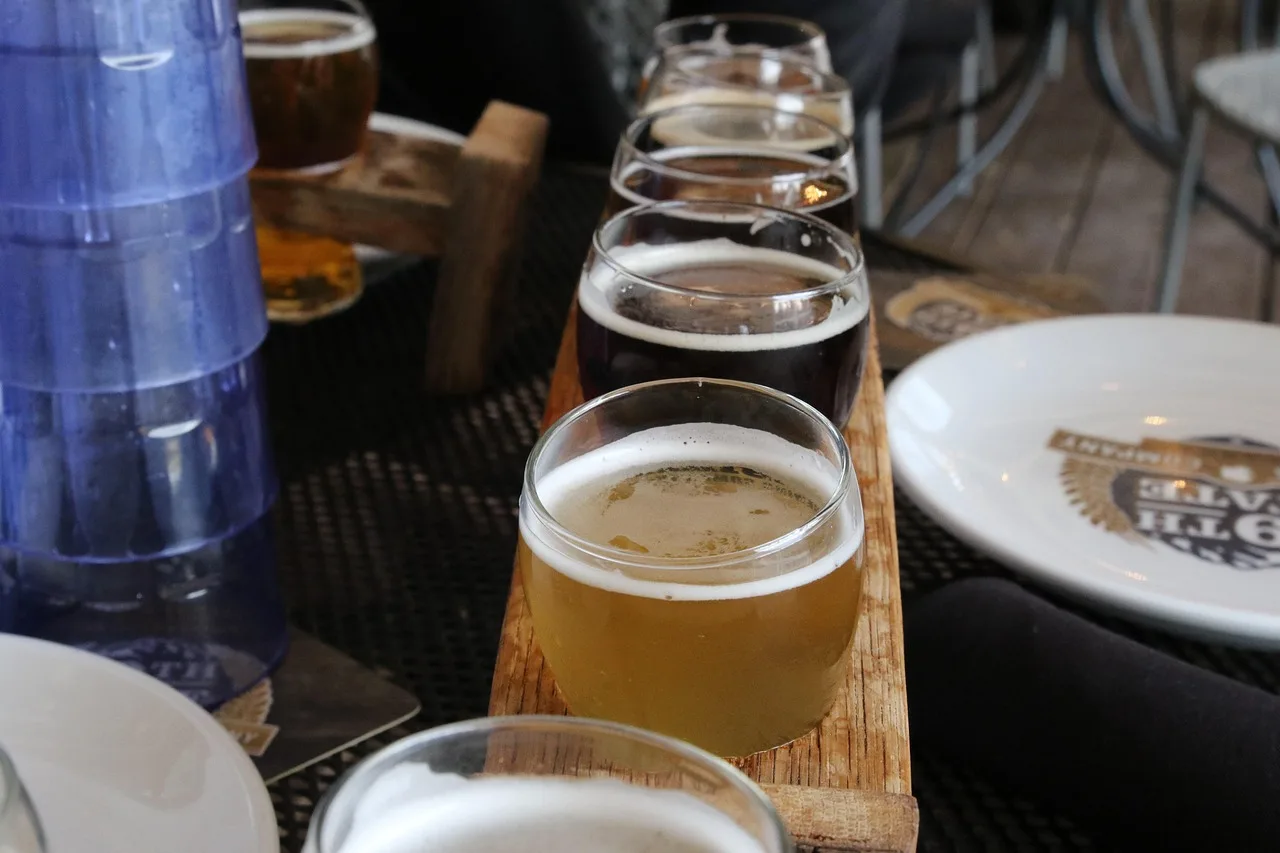
Pour 60 ml (2 oz) per sample. That is enough for aroma and three sips, and small enough that nobody finishes a full beer before sample four.
Keep the session under 90 minutes and reset after every three samples with five minutes of plain water and unsalted crackers.
If a taster cannot describe a sample in one sentence, the sample is too large or the flight is too long.
Session setup checklist
- 9 samples max, 6 comfortable
- Pour 60 ml (2 oz) per sample
- Keep session under 90 minutes
- Reset every 3 sampleswater, crackers
- No coffee, citrus, mint 30 min before
Randomizing pour order so the ranking holds
Serving order is the quiet variable in every blind panel. Bitterness and roast build across a flight, so a lager poured after three stouts reads thinner than it is.
Randomize per taster, not per table. One shared order means the same beer always meets the same tired palate at the same point.
Assign positions with a random number generator such as random.org, or a RAND() column in a spreadsheet, then check the output against a balanced grid.
Randomizing pour order
| Pour position | NA lager | NA IPA | NA stout |
|---|---|---|---|
| First | 4 tasters | 4 tasters | 4 tasters |
| Second | 4 tasters | 4 tasters | 4 tasters |
| Third | 4 tasters | 4 tasters | 4 tasters |
Balanced pour order grid
NA lager
- First
- 4 tasters
- Second
- 4 tasters
- Third
- 4 tasters
NA IPA
- First
- 4 tasters
- Second
- 4 tasters
- Third
- 4 tasters
NA stout
- First
- 4 tasters
- Second
- 4 tasters
- Third
- 4 tasters
Code every glass with a random three digit number and keep the key face down. Anyone who knows the order leans toward the beer they already like.
Example: a twelve taster NA IPA, lager and stout run
- Recruit twelve tasters with no colds, and brief them on the score sheet.
- Buy three brands each of NA lager, NA IPA and NA stout, then chill everything for 24 hours.
- Pour 60 ml at 45 F for lager, 50 F for IPA and 55 F for stout.
- Label each glass with a random three digit code and give each taster a personal pour order.
- Run three flights of three samples with a five minute reset between flights.
- Collect the sheets and report mean and median for bitterness, body and aroma.
Expect stout to score higher on body. The reason why stout pours thicker than IPA sits in the grain bill, residual sugar, lower carbonation and smaller foam bubbles.
Roasted barley is a defining feature of the style, as the overview of stout describes.
The wider picture, including how blind panels rank NA IPA against lager and stout across brands, is worth reading before you design the next session.
Scaling the method to a home panel
A home panel can work with six tasters if everyone scores every beer and nobody pours more than six samples.
Scale the pours to 45 ml, keep the reset food simple, and set up a fair home tasting with coded glasses and a printed key.
Write scores on a one page scoring sheet rather than a notebook, then average across tasters instead of arguing across the table.
Temperature is the easiest thing to get wrong at home. A lager shows best near 45 F, while a stout served that cold reads thin and harsh.