Industry
How to assess alcohol-free bar demand on US college campuses
A field method for alcohol-free bar demand on US college campuses: size the reachable student pool, check campus rules, and test term and menu signals.
What to take away
- Alcohol-free bar demand on US college campuses tracks three inputs: total enrollment, the share of students under 21, and campus alcohol rules.
- Dry campus policies move socializing off school property, so the nearest licensed commercial street absorbs the demand.
- National surveys show lower past-30-day drinking among college students than a decade ago, which shrinks the alcohol-led crowd.
- Academic terms can create a summer trough, so compare term enrollment and make sure rent math holds through June, July and August.
- Permit timing is the slow variable. Demand can arrive in one semester; a license rarely does.
Enrollment math behind campus alcohol-free bar demand
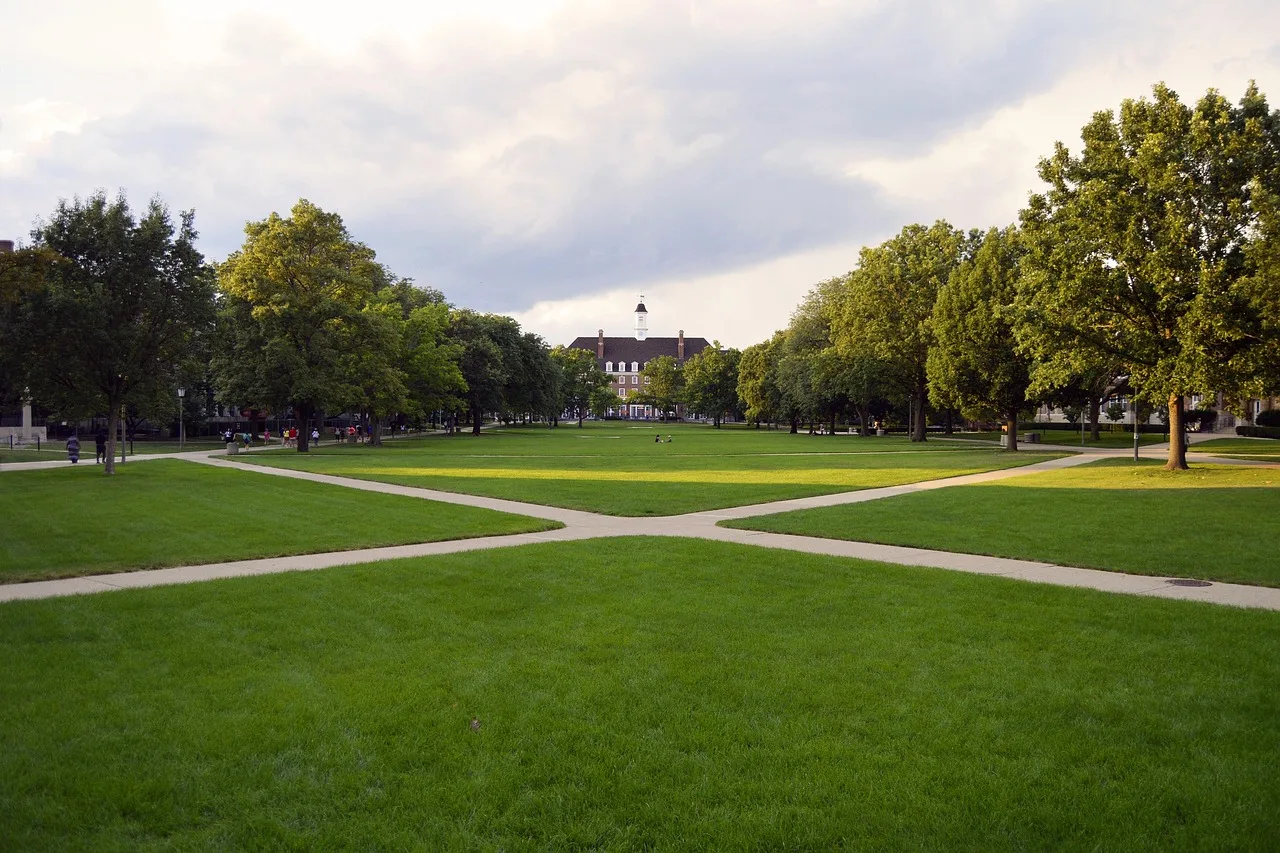
A campus of 30,000 students is a scale example, not a customer count. Enrollment totals are public through each university's institutional research office and through IPEDS, the federal postsecondary data system.
Campus enrollment math
- 30,000students on campus
- 21minimum purchase age
- Under-21usually larger group
The minimum purchase age is 21 in all fifty states. Use the under-21 share to describe the campus age mix, not as a proxy for the number of people who would choose an alcohol-free bar.
Institutional research offices and university fact books may publish enrollment by age band. For a 30,000-student campus, multiply enrollment by the reported under-21 share to estimate the number of under-21 students; do not treat that result as a count of likely customers. Students 21 and older may also choose alcohol-free drinks, so test that demand separately.
Dry campus alcohol policy and the off-campus gap
Brigham Young University and Liberty University prohibit alcohol on campus and in university housing. Treat a dry-campus rule as a reason to investigate off-campus routines and nearby gathering options, not as evidence that a bar will find enough customers. If a concept also serves alcohol, check whether it needs a venue with a permit.
Dry campus demand check
Is the campus or housing dry?
demand relocates off campus
on-campus demand stays
Dry counties and precincts can limit or prohibit alcohol service; that does not establish whether people nearby want an alcohol-free venue. Confirm local-option status with the city or county clerk. If the concept will serve alcohol, also identify the relevant state alcohol beverage control agency or liquor-control board. In California, the California Department of Alcoholic Beverage Control lists license categories including on-sale general, on-sale beer and wine, and off-sale beer and wine.
A dry-campus rule is a reason to test off-campus demand, not proof that it has moved to the nearest commercial street.
College drinking trends and alcohol-free bar demand
Monitoring the Future, the University of Michigan survey series, tracks alcohol use among college students. Treat national survey patterns as context rather than a local forecast of alcohol-free visits; NIAAA's alcohol facts and statistics page provides health-risk context.
Alcohol-led vs zero-proof
Alcohol-led bar
- Revenue base
- Fewer drinkers
- Spend per head
- Must be higher
- Menu fit
- Full-ABV only
Zero-proof list
- Revenue base
- More customers
- Spend per head
- Spreads rent
- Menu fit
- Low and 0.0%
Do not translate drinking rates into predicted alcohol-free visits or revenue. A zero-proof list gives you something to test; track actual inquiries, orders and repeat purchases rather than assuming that everyone who skips alcohol will become a customer.
Not every student who skips alcohol is abstaining for good. Many are cutting frequency, which favors low-ABV and 0.0 percent options side by side on one menu.
Example: reading a college town before signing a lease
Five checks, in order:
- Pull total enrollment and age bands from the university's institutional research office or IPEDS. Multiply enrollment by the reported under-21 share to estimate the under-21 population, but do not count it as expected customers.
- Read the student code of conduct for alcohol rules covering dorms, Greek housing and campus events; treat those rules as context to investigate, not a measure of off-campus demand.
- Confirm wet, damp or dry status for the city, county and precinct with the local clerk. If serving alcohol, check the relevant state alcohol beverage control agency or liquor-control board for applicable license categories and local requirements.
- Walk the late-night route between the dorm cluster and the nearest commercial street at 11 p.m. on a Thursday. Note access and existing venues, then check whether prospective customers actually use that route.
- Compare fall, summer and winter enrollment using registrar term reports or the university fact book. Use the same enrollment definition for each term to see how the reachable population changes.
Reading a college town
| Signal | Where to read it | Why it moves demand |
|---|---|---|
| Total enrollment | Institutional research office | Sets the size of the walkable base |
| Under-21 share | IPEDS enrollment by age | Measures the legal non-drinking crowd |
| Campus alcohol policy | Student conduct code | Decides where students may drink |
| Local option status | City or county clerk | Decides if a permit exists at all |
| Summer enrollment | Registrar term reports | Sets the off-season revenue floor |
Menu tests as demand signals
Treat menu styles as testable hypotheses, not proven campus bestsellers. A sessionable nonalcoholic lager, a nonalcoholic IPA and a two-ingredient mixed drink are options to trial; compare requests, orders and waste to learn what works for the local crowd.
A reference list can help generate a test menu, and this catalog of non-alcoholic mixed drinks covers classics and modern builds. Track which options customers request and order, and consider a warm option and a canned option for walk-out orders.
Use orientation, homecoming and finals week, along with department events and alumni nights, to map when potential customers may be nearby. Check the campus calendar and term enrollment rather than assuming each event will generate bar visits.
Do not use the Chicago sober curious scene as evidence for a campus market; treat it only as a reminder to verify local permit conditions separately from demand.