Reviews
Part of Why a zero proof label keeps quietly reformulating behind the same brand name
4 points worth checking on zero proof beverage brands
Four checks for zero proof beverage brands reviews: the conditions recorded, the label's responsibility line, what tasting can prove, and unverified claims.
Reviews in this category are unusually unreliable, and the reason is structural rather than dishonest. Products change between batches, distribution is regional, samples arrive free, and there is no shared vocabulary to score against. A review that does not say how it was made is not evidence of anything.
The four points worth checking on zero proof beverage brands
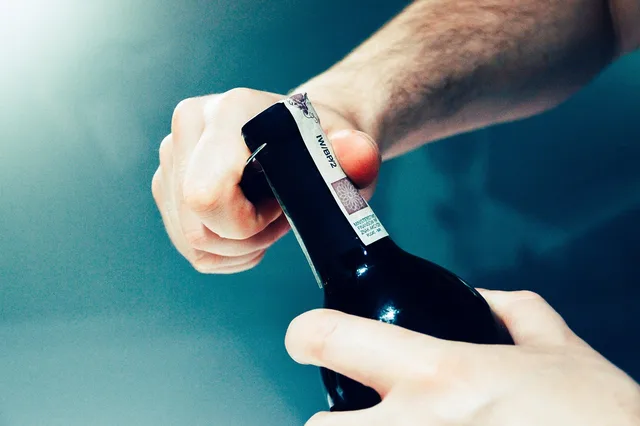
- The label: who is answerable for the bottle.A label carries a responsibility line naming the manufacturer, packer or distributor and a place of business, usually introduced by "Manufactured by," "Packed by" or "Distributed by." It is the part of a label a reader can check directly.
- The claims: has anything actually been verified?Tasting establishes preference and detects faults. It does not establish composition, so a claim about what a drink does for you cannot be confirmed at a table. A claim the reviewer has not checked should be reported as a claim, not repeated as fact.
- The review: which conditions are recorded?The date the bottle was opened, any batch or lot code visible on the packaging, the serve with its dilution ratio and mixer, the temperature and glass, and what the drink was tasted against.
- The review: what does it admit it could not determine?The unknowns belong in the record. So does the bottle's supply: free samples are not disqualifying, but they have to be declared.
None of the four checks needs a formal review to run, and naming a bottle is not the same as scoring it. Take a can of Athletic Brewing non-alcoholic beer, a bottle of Seedlip or a bottle of Ritual Zero Proof: read the responsibility line and see who is answerable, look up any claim against FDA's list, and note whether a batch code, a serve and a temperature are recorded anywhere a reader can find them.
What a usable review contains
- The date the bottle was opened and the date it was tasted.
- Any batch or lot code visible on the packaging.
- The serve used, including dilution ratio and mixer.
- Serving temperature and glass.
- What it was tasted against.
- Whether the bottle was bought or supplied.
- What the reviewer could not determine.
That last line is the one most reviews omit and the one that makes the rest credible. A reviewer who never says what they could not tell is not looking hard enough. The conditions that most often invalidate a tasting before it starts are set out in our guide Alcohol-free drink mistakes: how to taste.
What a usable review contains
- Bottle opened date and tasted date
- Batch or lot code from packaging
- Serve, dilution ratio and mixer
- Serving temperature and glass
- What it was tasted against
- Bought or supplied, and unknowns
What tasting cannot do
A palate detects faults, imbalance and preference. It does not measure composition. Laboratory examination of beverages is a different discipline with defined procedures.
Palate versus laboratory
Tasting at a table
- Detects
- Faults, imbalance, preference
- Method
- Sip and compare
- Output
- Opinion on a serve
- Can say why
- No
Laboratory examination
- Detects
- Composition and contamination
- Method
- Defined macroanalytical procedures
- Output
- Counts and percentages
- Can say why
- Yes
FDA's macroanalytical procedures for beverages and beverage materials show what that work involves: they examine beverage materials rather than impressions of them. The manual's coffee bean method finds defects in individual beans from insect infestation, mold or deterioration. It assesses lot contamination by insects, mold, rodents or extraneous matter, expressed as counts and percentages.
Nothing a reviewer does at a table resembles that. A review can honestly say a drink tasted stale. It cannot say why, and it should not guess in print.
Do not launder a claim by repeating it
The most common failure: a reviewer restates a producer's claim as if checking it. Adaptogens in alcohol-free drinks: a US guide covers how this wording is regulated in the United States: a small subset of claims has been through a formal process, the rest has not.
Our guide, What labels can tell you about zero proof beverage brands, sets out which part of a label a reviewer can check. The responsibility line gives the name and place of business of the manufacturer, packer or distributor: the party answerable for the product.
FDA's page on authorized health claims explains the process, and 21 CFR 101.14 sets the general requirements for health claims on food labels. FDA reviews a claim through a petition. Approval requires significant scientific agreement among qualified experts that the totality of publicly available evidence supports it. That standard aims for high confidence in the substance and disease relationship.
The categories matter when a reader checks a label. An authorized health claim has cleared that standard. A qualified health claim is allowed with a disclaimer about the level of scientific evidence. A structure/function claim describes how a nutrient or ingredient affects normal body function, and it does not go through the petition process.
If a claim has not been through something like that, the honest way to report it is as something the producer says, attributed and unendorsed.
Our position on named brand reviews
We do not publish scored reviews of named products. Batch variation, regional availability and quiet reformulation mean a score would describe one bottle at one moment while reading as a verdict on a brand; our guide to what to look for when buying zero proof beverages goes through the variables. What we publish instead is method, so that a reader can run the comparison on the bottles actually available to them.
We will describe what a style tastes like, what a construction method does to a drink, and what a label discloses. All three are checkable, and none expires when a distributor changes.
We will not publish a number against a name and let it stand for a year.
The method itself is set out in How to taste and compare botanical drink ideas at home, and the behavior of brands in this category is described in 13 zero proof beverage brands worth knowing about in 2027.